
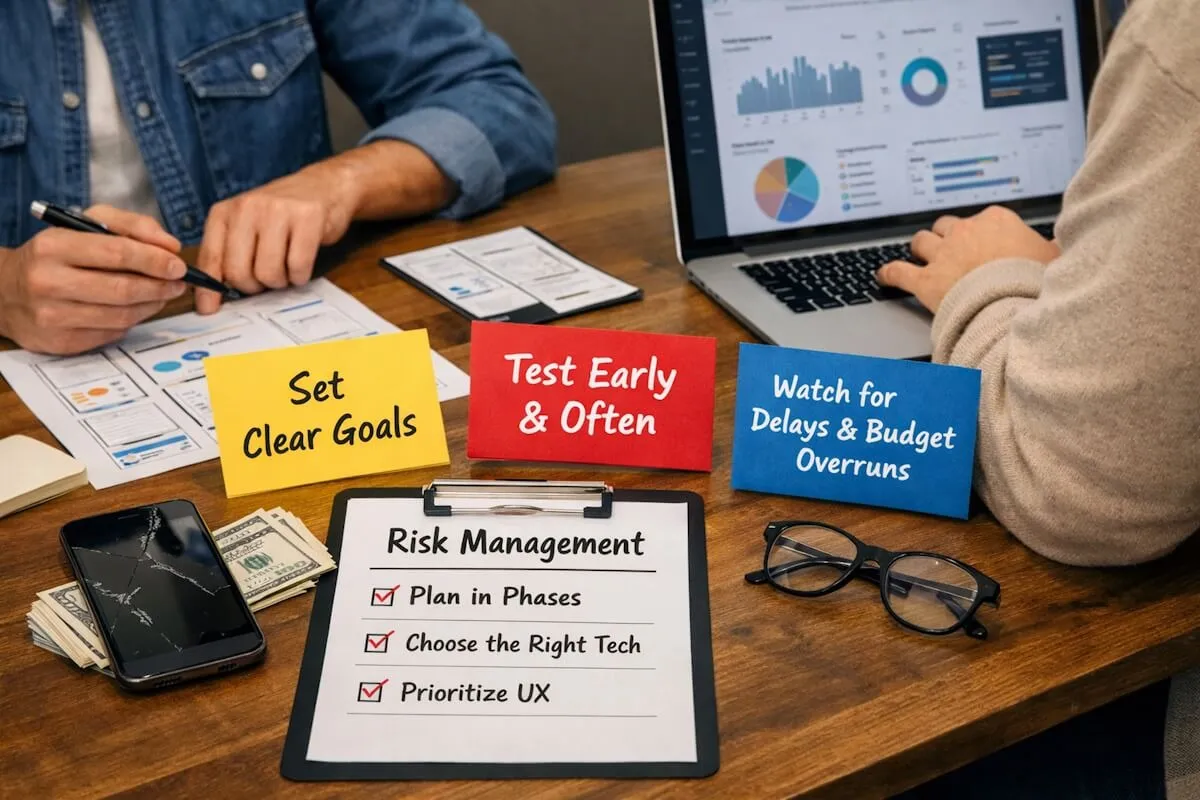
Every mobile app project comes with risk.
Not the dramatic kind. The quiet kind.
Missed timelines. Budget creep. Features that don’t work as expected. Users who don’t stick around.
These risks don’t usually show up all at once. They build slowly.
The good part? Most of them can be identified early and avoided with the right approach.
Let’s walk through how to spot them before they become problems.
Start With Clear Goals, Not Assumptions
A lot of risk begins with unclear direction.
If your team is not aligned on what the app should achieve, decisions become inconsistent.
Features get added without purpose. Priorities keep shifting.
Ask yourself:
- What problem are we solving?
- Who are we building this for?
- What does success look like?
Clear answers reduce confusion later.
Break the Project Into Smaller Phases
Trying to build everything at once increases risk.
Too many moving parts. Too many dependencies.
Instead, divide the project into phases.
- Core features first
- Additional features later
- Improvements based on feedback
This makes it easier to track progress and catch issues early.
Validate Before You Build Too Much
Don’t assume users will like your app.
Test your idea early.
- Share prototypes
- Gather feedback
- Adjust based on responses
This reduces the risk of building something that doesn’t connect with users.
Choose the Right Technology Stack Early
Your tech choices affect performance, scalability, and maintenance.
Changing your stack later is difficult.
Take time to evaluate:
- Performance needs
- Future scalability
- Team expertise
A well-chosen stack reduces technical risks.
Plan for Scalability From the Start
Your app might start small.
But what happens if it grows quickly?
If your system is not prepared, performance issues show up.
Planning for growth early avoids major restructuring later.
It doesn’t mean overbuilding.
It means being prepared.
Prioritize User Experience
UX issues are a major risk.
If users find your app confusing or frustrating, they leave.
Focus on:
- Simple navigation
- Clear actions
- Smooth interactions
Testing UX early helps catch problems before launch.
Keep Communication Clear and Consistent
Miscommunication creates delays.
It leads to misunderstandings, rework, and missed expectations.
Set up regular check-ins.
Keep updates simple and clear.
Make sure everyone understands what’s happening and what’s next.
Don’t Ignore Testing
Skipping testing is risky.
Bugs that slip through can affect user experience and trust.
Plan for testing from the beginning.
- Functional testing
- Performance testing
- User testing
Catching issues early is always easier than fixing them later.
Watch Out for Scope Creep
Adding new features mid-project sounds harmless.
But it can disrupt timelines and budgets.
Every new addition affects the plan.
Be selective.
If a feature is not critical, consider adding it later.
Monitor Progress Regularly
Don’t wait until the end to review progress.
Check regularly.
- Are we on track?
- Are there delays?
- Are there blockers?
Early detection makes it easier to fix issues.
Prepare for Post-Launch Challenges
Risks don’t end at launch.
You may face:
- Bugs
- User feedback
- Performance issues
Have a plan for handling these.
Post-launch support is just as important as development.
Working with a Mobile App Development Company that offers ongoing support can help manage these risks.
And if you want flexibility to respond quickly to changes, you might choose to Hire Mobile App Developers who can address issues as they arise.
Use Data to Reduce Uncertainty
Once your app is live, data helps you make better decisions.
- User behavior
- Drop-off points
- Feature usage
This reduces guesswork.
And helps you focus on what matters.
Build a Buffer Into Your Plan
Not everything goes as expected.
Delays happen. Issues come up.
Having a buffer in your timeline and budget gives you room to handle them.
Without it, even small issues can disrupt your project.
One Simple Rule to Remember
Most risks are easier to prevent than to fix.
The earlier you identify them, the less impact they have.
Final Thoughts Before You Begin
Mobile app development is not risk-free.
But it doesn’t have to be unpredictable.
With clear planning, regular checks, and the right team, you can manage most challenges before they grow.
Focus on clarity. Stay flexible. Keep improving.
Because the goal is not to avoid all risks.
It’s to handle them before they slow you down.
