
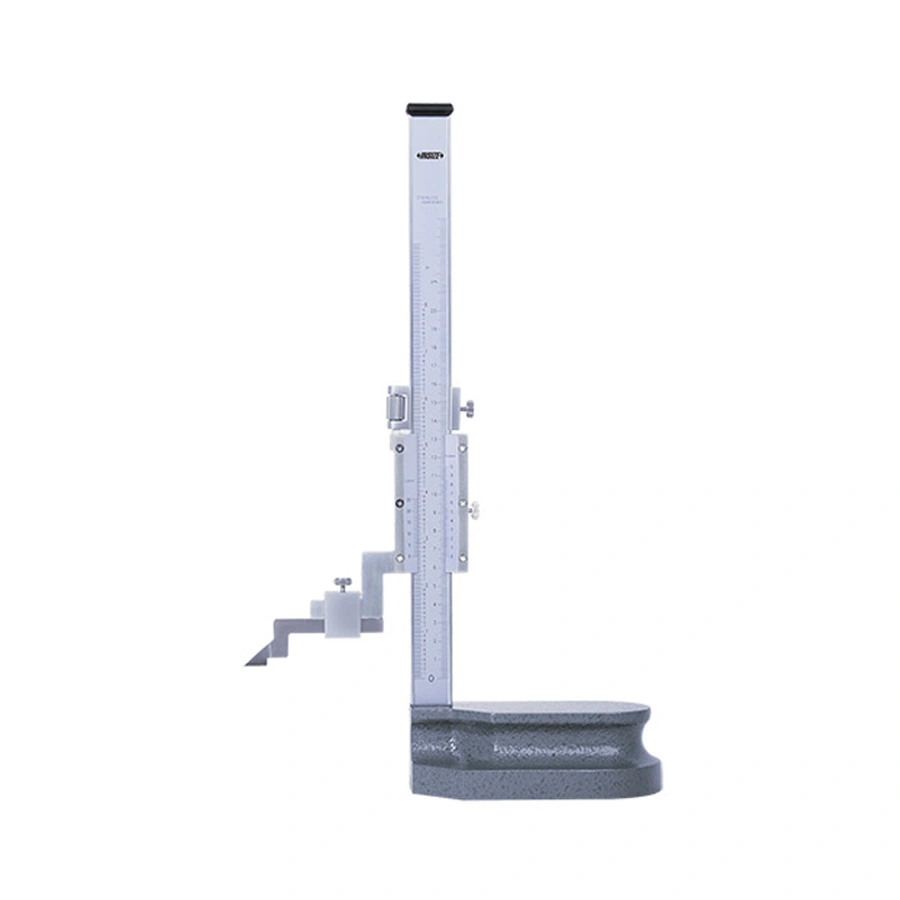
In today’s engineering and manufacturing environment, precision measurement is a basic need. All manufactured parts, fabricated structures or assemblies must be precisely dimensioned for fit, function and performance. There are several instruments used for measurements all the way through the production, but the height gauge is one of the most useful instruments for dimensional inspection. It is useful in quality control departments, machine shops and inspection laboratories due to its ability to make accurate vertical measurements.
As today’s industries embrace cutting-edge manufacturing techniques, height gauges are adapting to perform quicker inspections, greater accuracy and enhanced integration with today’s quality management systems. Knowing how these tools work helps tech teams pick the right gear for daily tests and odd jobs too.
What Is a Height Gauge?
A crisp test tool that checks the precise gap going from a base block up to a mark on a job piece is just a height gauge. It is usually employed in a precision surface plate to guarantee stable and accurate measurements.
There are mechanical, dial and digital height gauges. Although many workshops are still using the traditional models, the digital height gauges offer a few added conveniences such as easy-to-read displays, quicker height measurements, and better repeatability.
They can be used for measurement, marking and inspection jobs in a wide range of engineering jobs.
Why Height Gauges Are Important in Engineering
Tolerances in manufacturing are now getting smaller and smaller, especially with the increasing complexity of the products. When components need to be moved for assembly or final inspection, height measurement will help ensure that they meet design specifications.
To probe real specs, a height gauge yields the right, clear facts. Such quick checks keep bad part slips low. They also boost production rates by enabling the operator to check a number of components with efficiency and accuracy.
In industries where precision can be a key factor in product quality, height gauges continue to be an essential component of the inspection process.
Common Applications in Manufacturing
In the manufacturing process, the height gauge is used to check dimensions, inspect parts that have been machined and to aid in layout. They can be used in various industrial applications because of their capability of making accurate vertical measurements.
These are some of the more common uses:
- Measuring component height and thickness.
- Checking step dimensions.
- Verifying groove and slot depths.
- Inspecting parallelism and flatness with suitable accessories.
- Marking layout lines before machining.
- Supporting quality control inspections.
- Verifying dimensions during assembly operations.
These applications are useful for manufacturers to ensure the same manufacturing quality from product to product and prevent manufacturing errors.
Understanding the Insize Height Gauge
Insize height gauge is one of the commonly used height gauges in the engineering workshop and the quality control department where dependable dimensional measurement is required. They come in both electronic and mechanical forms and are intended to provide precise readings and be used in industrial applications.
An inside height gauge is frequently used to check the dimensions of the component after it has been machined, for production dimensions, and prior to the initiation of production. The use of a digital model can often help improve productivity by making measurement easier and reducing reading errors, particularly when repetitive measurements are required.
Factors including measurement range, required accuracy and type of inspection will determine the choice of model.
Advantages of Using Height Gauges
A good height gauge brings tons of value that speeds up shop work and keeps part grade high. They hit the mark well, making them ideal for daily runs or real close, tight checks.
Here are some of the benefits you can enjoy:
- High measurement accuracy.
- Consistent and repeatable inspection results.
- Faster dimensional verification.
- Improved layout marking precision.
- Reduced manual measurement errors.
- Suitable for a wide range of industrial applications.
These benefits enhance manufacturers’ workflow, ensure quality control during manufacturing and help them keep track of the entire process.
Choosing the Right Height Gauge
The right height gauge selection is determined by a careful analysis of the production requirements and not just by the size or the type of instrument display.
Before purchasing, manufacturers should take into consideration the surface plate compatibility, ease of operation, environmental conditions, accuracy, resolution, range of measurement and calibration requirements.
Digital models can be used to increase efficiency for those facilities that frequently need to take dimensional readings by making it quicker to read and more visible. For many jobs in the workshop, where simplicity and reliability are still key concerns, mechanical models continue to deliver reliable performance.
A long-term, reliable performance is provided by matching the instrument to the inspection process.
Best Practices for Accurate Measurements
A clean, stable surface plate is always the best surface for using height gauges to obtain consistent results. No dust, oil or debris should be on the workpiece or measuring surface that may interfere with the accuracy of the measurement.
For long-term performance, it is important to regularly calibrate, handle, and store units properly. The operators should also check that the measuring attachment is properly installed before taking measurements.
The practices outlined help to ensure reliable inspection data and to prolong the instrument’s life.
The Future of Height Gauge Technology
In modern times, manufacturing still holds on to automation, digital inspection systems and data-driven quality control. These innovations are driving evolution in height gauges, too, as they start to adopt electronic displays, data output, and better measurement capabilities.
True specs and safe size checks will stay key in real tight shop jobs as time goes on. Firms will keep lean on height gauges to get the right stats, which helps them hold high grade, cut bad scrap, and keep floor speed high.
Conclusion
In the shop today, the height gauge is a vital tool. Frankly, it plays a big role in building work. It gives you the exact height of any part. It also helps in quality control and manufacturing quality consistency. From general inspection and layout marking to precision verification, an insize height gauge is capable of ensuring reliable measurement results in various industrial applications. In the field of measurement, tsaifuddin.com provides the information needed for businesses to benefit from precise measurement, and for engineering to gain reliable resources for modern manufacturing.
